Launch Control
Designing a product decision game
Why a simulation
I built Launch Control because the most consequential product decisions rarely happen with complete information or enough capacity to pursue every good idea. Traditional case studies show the outcome after the ambiguity has been cleaned up; I wanted to preserve that tension and let someone experience how I weigh user trust, commercial pressure, stakeholder needs, and team health in the moment. The simulation turns that point of view into something playable: not a claim about how I lead, but a system you can test.
Design intent
Launch Control is designed to make product judgment observable. The simulation places the player inside a live-game launch where retention, revenue, player trust, stakeholder pressure, and development capacity compete for attention. The goal is not to identify a hidden correct answer. It is to decide which problem matters most, act on incomplete evidence, and be clear about what the team is willing to trade away.
Design approach
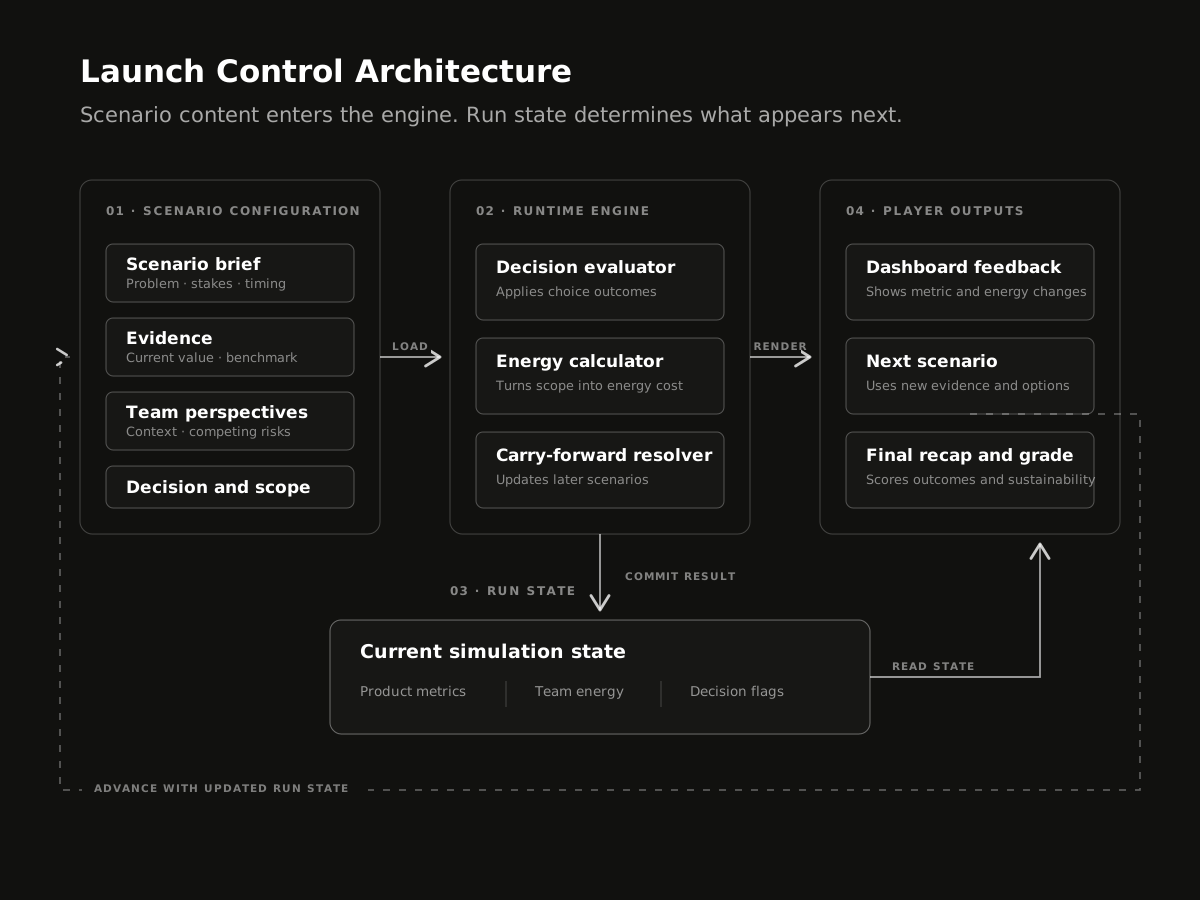
The experience uses a repeatable decision loop: frame the problem, inspect the smallest useful set of metrics, hear conflicting stakeholder views, commit to a response, and absorb the consequence. Information is sequenced deliberately so the player forms a diagnosis before seeing the available options. Team energy represents finite delivery capacity, and consequences carry forward, preventing the player from treating every issue as equally urgent. Scenarios are configured as data and processed through a shared state model, which keeps outcomes traceable and makes the system easier to tune.
What the simulation teaches
The simulation is built around a simple belief: product leadership is the allocation of attention and capacity under uncertainty. Strong decisions connect evidence to a clear priority, protect the team’s ability to respond, and accept that every choice closes off another path. The final recap evaluates that reasoning across the full launch rather than rewarding isolated short-term wins. In that sense, Launch Control is both a game and a compact demonstration of how I approach product strategy, systems design, and execution.

A deep dive into Ethereum’s progress and vision for decentralized applications.

Why startups stall when they use one growth playbook across every stage.

How Game Science turned cultural focus and execution into a breakout global hit.